Thursday, January 24, 2013

You are Christ's body...


What does it mean to be the Body of Christ?

God has spoken his Word into the context of our world, which allowed the Church to come into existence:  Jesus lived, died, and rose, and thus the Church was born.  The Church remains the ongoing vehicle for the Word of God living among us, and we have a role, a responsibility in this, to wit, to carry the Word forward.

First, like the people of Ezra’s time and like those in the synagogue, listening to Jesus read from the scroll of the prophet Isaiah (Luke), we are those who hear it – with our ears and with our hearts.  Baptism opens us to the Word within, and gives us reassurance that it is trustworthy, that God’s love for us is the Truth.

Then, we become a vehicle through which that love can find its living force; as Saint Paul tells us, you are Christ’s body.  Divisions preclude love, as does isolation.  But if we take our baptism seriously, we are baptized into a Body, the Body of Christ.  We are all parts, many though we are (1 Cor); as parts, we each give flesh to the body; God’s Word gives Spirit and Life to that body (Ps.19).  And we are called to be that body -- Christ's hands and breath and feet -- in this world.

Our readings this coming Sunday thus come together in this larger concept, speaking to what is central to who we are as a church, and giving definition to what it means to be church.  Being in community sometimes means pain, but that pain can be part of the message:  we care because we believe; our belief has an effect because we give witness to it, shoring up our faith in one another and allowing God’s love to live in us.  Faith has to be both personal and shared – drawing us into the community that is church.


This reflection is based on Fr. Pat's Thursday Scripture class.
Photo source

Monday, January 21, 2013

And the best is saved for last...

And the best is saved for last...


So, what is the whole story of Jesus about, according to John's gospel?

According to John's inaugural story of Jesus' public activity, it is about a wedding.  More:  it is about a wedding banquet.  More:  it is about a wedding banquet at which the wine never runs out.  More:  it is about a wedding banquet at which the wine never runs out, and the best is saved for last.  The story of the wedding at Cana invites us to see that the story of Jesus is about this.


Ponder this metaphor...
Jesus, the incarnation of God's love, 
is the wine that never runs out, the best saved for last.

Marcus J. Borg, The Heart of Christianity

Renowned Jesus scholar Marcus J. Borg encourages Christians to seek not only literal, historical details in the Gospels, but also a metaphorical understanding of the stories, as a means of finding deeper and richer meanings there.  Applying this to the story of Jesus turning water into wine that we heard this weekend, Borg says that yes, the "spectacular deed" is important as evidence of Jesus' identity as the Son of God, but that the placement of this story at the beginning of John's gospel means that John is using it as a more global indicator of "what the story of Jesus is about" as a whole, particularly within the rich web of images associated with marriage in the Judeo-Christian tradition. 

Photo source:  Paolo Veronese, The Marriage at Cana, 1553

Thursday, January 17, 2013

You have kept the good wine until now...


We cannot even begin to conceive of the limitlessness of God’s love for us, yet it is love that God has been expressing for humankind throughout salvation history, a love that finds its consummate expression in our union in the Eucharist.

In this Sunday’s reading from Isaiah, the post-exilic prophetic voice references a new name conferred by the Lord on the people of Israel, a name through which God creates the people anew.  No longer are they forsakened or abandoned:  As a young man marries a virgin, your Builder shall marry you; and as a bridegroom rejoices in his bride, so shall your God rejoice in you.  Israel’s role as bride of God is to be the very glory of God, and to manifest that glory to the world – a sign of union.

Our text from John’s Gospel offers us the first of Jesus’ seven signs:  the changing of water into wine at the marriage feast in Cana:  you have kept the good wine until now, the headwaiter marvels to the bridegroom.  In revealing Jesus as the Messiah – a revelation that only a few can begin to grasp – this miracle is representative of the overabundance that is heaven, God’s infinite love, revealed in the image of a banquet that unites:  again, a wedding banquet.

The Eucharist is our celebration of the Messianic banquet to come, a prefiguration of our “wedding” with God promised by the death and rising of Jesus.  Our celebration of Eucharist is our access to the love of God; graced by our experience of God’s love in our lives, the gift we take forth from Mass is our capacity to reach out to one another, to open our hearts, to meet the needs of those around us, each with our own gifts (1 Corinthians).  This is the proclamation of the glory of God:  when we use our gifts to become vehicles of justice, giving life to one another, as we simultaneously give to the Lord glory and praise (psalm 96).


This reflection is based on Fr. Pat's Thursday Scripture class.
Photo source

Wednesday, January 16, 2013

Catholic Relief Services in Haiti, 3 Years After the Quake

Catholic Relief Services in Haiti, 3 Years After the Quake

Interested in reading about what Catholic Relief Services is doing in Haiti three years after the earthquake there killed some 250,000 people and destroyed the homes of hundreds of thousands more? Check out "Road to Recovery," an article by America Magazine's associate editor Kevin Clark by clicking here.

Meeting Christ in the Church


to read more from Henri Nouwen visit www.HenriNouwen.org  

Tuesday, January 15, 2013

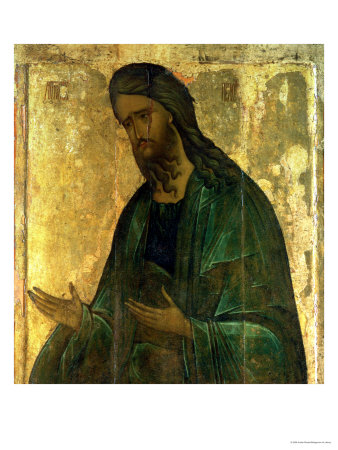
The Man Who Was a Lamp


The Man Who Was a Lamp

His name is John,
a man who was a lamp,
at least that is what Jesus said,
‘A burning and shining lamp.’
The implication is clear:
The lamp is a torch through the darkness
to find the Light of the Wrold.
As the lamp comes closer to the Light,
its radiance is overwhelmed.
It is in the presence of a stronger shining.
It decreases as the Light increases.
Yet there is no comparison.
[…]
Yet he came to me
to go beyond me.
He entered the water
to rise out of it.
He knew I would know him when he came
even though I did not know him before he came.
The fulfillment is always more than the promise,
but if you hunger and thirst in the promise,
you will welcome the One Who Is Not You
as All You Are,
and more.
[…]
The cave of Christmas
is hidden
in the center of the earth.
You will need a lamp for the journey.
A man named John
is a step ahead of you.
His torch sweeps the ground
so that you do not stumble.
He brings you,
at your own pace,
to the entrance of the cave.
His smile is complete,
perfect,
whole,
lacking nothing.
Inside
there is a sudden light,
but it does not hurt your eyes.
The darkness has been pushed back by radiance.
You feel like an underwater swimmer
who has just broken the surface of the Jordan
and is breathing in the sky.
John is gone.
Notice
from whom the light is shining,
beloved child.

Excerpted from John Shea, Starlight:  Beholding the Christmas Miracle All Year Long
For the complete poem, click here.

Photo source:  St. Andrei Rublyov, St. John the Baptist (15th c. icon)