Showing posts with label Acts 10. Show all posts

Thursday, January 9, 2020

Sunday Gospel Reflection, January 12, 2020: I need to be baptized by you...


Why does Jesus have to be baptized?

  When Jesus comes from Galilee to be baptized by John at the Jordan, John the Baptist is understandably confused:  I need to be baptized by you, and yet you are coming to me?  Jesus’ response in Matthew's Gospel is revelatory:  Allow it now, for thus is it fitting for us to fulfill all righteousness.  By submitting to John’s baptism by water, Jesus is also submitting to God’s plan for the salvation of humanity by embracing his own humanity, his human nature, which, though he is without sin himself, is nonetheless a part of his identity.  Jesus is the human-divine person of the Trinity, whose other two persons are also revealed at the moment Jesus is baptized:  the Spirit of God descends like a dove and God the Father’s voice is heard from the heavens, identifying Jesus as his beloved Son, with whom God is well pleased.

  Jesus’ ministry, which begins at this moment, has long been identified with the mission of the suffering servant described in the Book of the Prophet Isaiah, a servant with whom God is also well pleased.  This mission involves gentle justice and compassion – a bruised reed he shall not break, the Lord says; it is to be a life of service dedicated to opening the eyes of the blind and bringing out prisoners from confinement.  In this way, the baptism of the Lord is another epiphany:  this gentle servant will be a light for the nations, and also a king who, as Psalm 29 notes, will bless his people with peace. 

  Peter will recall Jesus’ baptism in the Acts of the Apostles as the foundational moment of the Messiah’s ministry of peace:  You know the word God sent to the Israelites, as he proclaimed peace through Jesus Christ, beginning in Galilee after the baptism that John preached.  Moreover, anointed with the Holy Spirit, Jesus fulfills to the letter the mission of the suffering servant, doing good and healing all those oppressed.  By embracing his own humanity through baptism, Jesus can better heal and serve that humanity, becoming a source of righteousness, breaking down all barriers to right relationship with God, and thereby offering a means to salvation for all.  What began as a puzzling dip into the Jordan makes sense only in the context of Jesus’ ultimate mission of peace and redemption, and points to our own role in that mission as Christians who are ourselves baptized priest, prophet and king.  May we, too, then, be a light for the nations as we embrace lives of service and compassion for all.

Image source:  www.wordclouds.com

Thursday, May 3, 2018

Sunday Gospel Reflection, May 6, 2018: This I command you: love one another...


Are you ready to let God expand your vision? 

   As the Son of God, Jesus knows the fullness of his Father’s love:  that love encompasses all he is; it is not separate from him.  When he says to his disciples, I love you, they can’t even begin to take in the full meaning of his statement.  Jesus will, just a few short chapters later in John’s Gospel, lay down his life for his friends so that the sins of all humankind might be forgiven, but, as they will learn, his love for them is greater than death.  Jesus tells the disciples that they should remain in his love, that my joy may be in you and your joy may be complete.  They have shared love on this earth; the disciples must continue to allow Jesus’ love to fill them, and to love others with that same love.  If they can do so, they will be expanding their own vision, because they will come to understand that he loves them without boundaries, without limitation, and they must go forth and do the same.  To live that reality is profoundly humbling.

   The First Letter of John will echo this sentiment:  where humankind creates a chasm between themselves and God, God bridges it, because God loves perfectly:  love is of God, love is the essence of God, the energy of God, the life source God offers to us all.  We have life through Jesus because we come to know love through him in a way we didn’t before.  That love reaches beyond human limitations, expanding our vision.  Consider the case of Cornelius, in the Acts of the Apostles.  Cornelius, a Gentile, has loved God and therefore knows God, so he is open to the revelation of God that Peter brings to him.  Moreover, every manifestation of love is a manifestation of God.  In Acts, God shifts the order of things, accepting Gentiles into the fullness of redemption as he accepted the Jewish people.   It is a fulfillment of Psalm 98:  The Lord has revealed to the nations his saving power…

   If, through faith or conversion, you have come to understand God differently than before, you must, as the psalmist notes, sing to the Lord a new song.  How could it be the same song when God has done something you haven’t anticipated? God is constantly revealing new things to us, challenging the way we look at things, expanding our vision, through his infinite love and care.  So sing that new song, allow his love to fill you, that your joy might indeed be complete!

This post is based on Fr. Pat’s Scripture class.
Image source:  www.wordle.net

Sunday, March 27, 2016

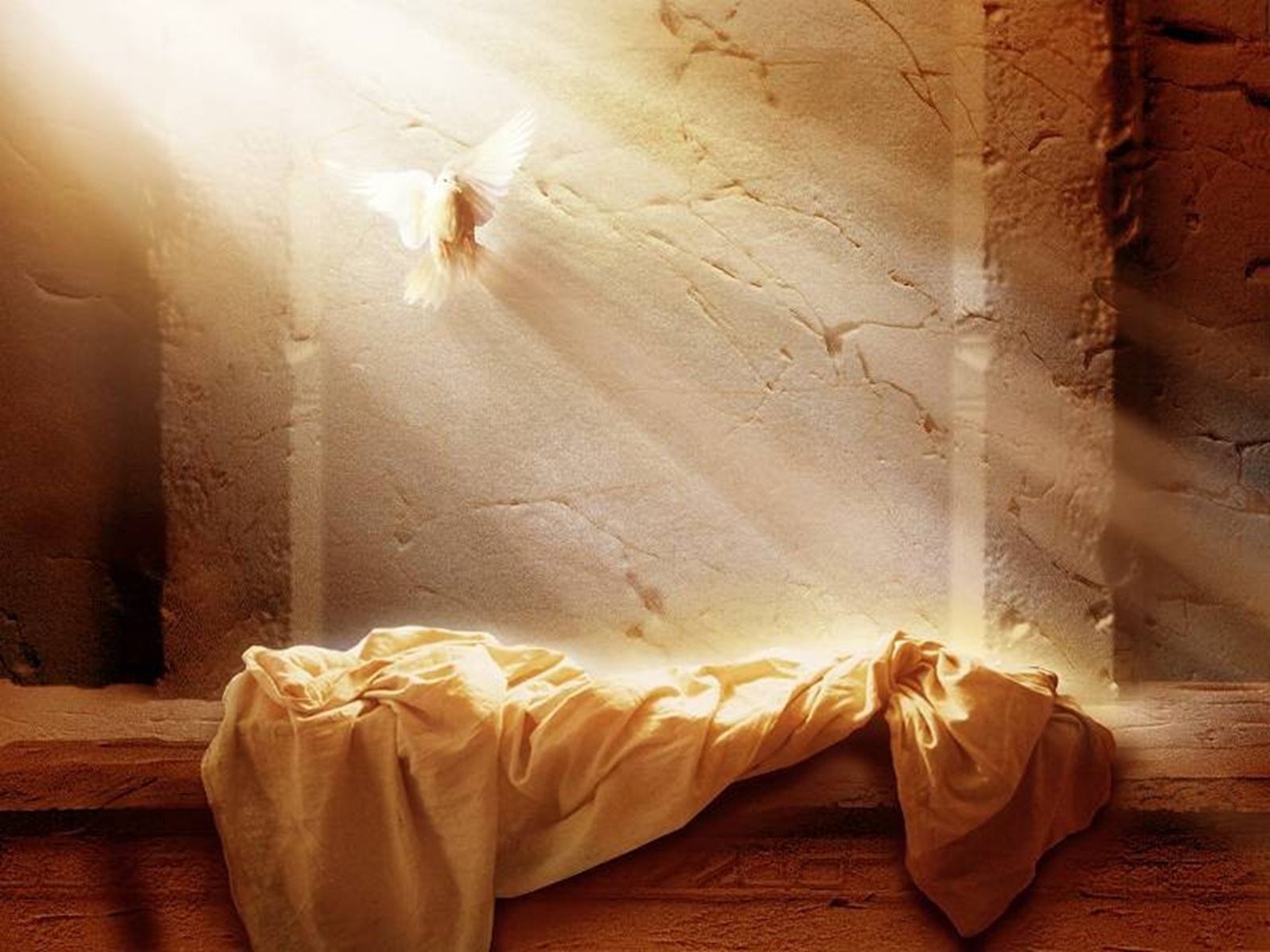
Easter Sunday, March 27, 2016: Resurrection Wonder


   It is not easy to convey a sense of wonder, let alone resurrection wonder, to another.  It’s the very nature of wonder to catch us off guard, to circumvent expectations and assumptions.  Wonder can’t be packaged, and it can’t be worked up.  It requires some sense of being there and some sense of engagement. 
(--Eugene H. Peterson)

May the experience of Resurrection wonder be yours...
HE IS RISEN, ALLELUIA!!
BLESSINGS AT EASTER FROM 
OUR LADY OF MOUNT CARMEL, MILL VALLEY!

Image source
Quotation source

Thursday, May 7, 2015

Sunday Gospel Reflection, May 10, 2015: Love is of God...

It’s a topological paradox!

When, in this Sunday’s Gospel from John, Jesus says to his disciples, Remain in my love, he’s asking them to come and live in him, just as he lives in the Father’s love; Jesus, in turn, promises to remain in us.  To remain in Jesus is to experience his love as one with him, with no separation; the joy of Jesus – he speaks so that my joy may be in you, he says – is the union that love brings, the connection that binds us to one another, and to Jesus.

It is this love that the First Letter of John calls us to as well:  let us love one another.  To do so is to mark the action of the Holy Spirit in our lives, for the Spirit is manifested by our love, our care, our concern for one another, and the love in our lives is a manifestation of God.  It truly is a topological paradox:  we are in God and God dwells in us, simultaneously!  Recognizing our brokenness, God sent his only Son into the world to heal it; Jesus then sends the Spirit so that we might continue to participate in that great love by letting God act in this world through us.  To know we are loved infinitely, without limits, changes us, dramatically alters our openness to God’s activity in us… and in everyone we touch when we share that love.

And it is precisely this love dwelling in Peter that brings him to the house of the Gentile Cornelius in our reading from Acts:  while Peter was still speaking these things, the Holy Spirit fell upon all who were listening to the word.  The Spirit affirms the belief already present, filling them with God’s love, with God’s presence, so that that love might dwell in them and they in it.  It is the fulfillment of the salvation that the Lord has made known, the covenant of kindness and faithfulness promised so long ago in Psalm 98.  That covenant knows no limits, no boundaries – which is precisely why the topological paradox is possible, manifest in us as we open to God dwelling in us, and promise, in turn, to dwell in God.

This post is based on Fr. Pat's Scripture class.
Image source:  Wordle