Showing posts with label John 20. Show all posts

Thursday, May 28, 2020

Sunday Gospel Reflection, May 31, 2020: The Spirit comes to the aid of our weakness...

What can the Spirit of God accomplish in us?

  In the Old Testament, the people of God are bound to God in covenant through the spirit of God that comes upon them; to break covenant is a sign of self-focus, an indication of a failure to give room to the spirit of God working within them.  We see this failure to recognize a need for God’s spirit at work in the story of the Tower of Babel in Genesis, when the people look to the work of their own hands as sufficient to greatness; in Exodus, on the other hand, the people are bound to God and God to God’s people through the work of God’s spirit in covenant, visible to them in the form of peals of thunder and lightening, a heavy cloud over the mountain, and a very loud trumpet blast .  The dry bones of Ezekiel are another example of a people dead to God through sin, but when God breathes spirit into them, they are lifted to new life.  God’s ability to transform us through God’s spirit is evident in Joel as well, when God says, I will pour out my spirit upon all flesh, and all people with thereby coming to unity in God.  Lord, send out your spirit, and renew the face of the earth, we sing in Psalm 104 – this is God’s action in our lives, time and time again, from the beginning of time.

  Jesus is clear to his disciples on this point:  Rivers of living water will flow from within him who believes in me, he tells the crowd at the end of the Feast of Tabernacles in John’s Gospel.  He is speaking in reference to the Spirit that we will receive once he has died and risen, a Spirit that will flow through us and from us to other.  That Spirit is the breath Jesus breathes upon the apostles in the upper room in John as well:  Receive the Holy Spirit, he tells them, receive, that is, the ability to do what I am sending you to do, to open yourselves to the Spirit in your life so you can understand those who need to be forgiven and forgive them.  It is the same Spirit that comes like a strong driving wind upon the disciples at the time for Pentecost in the Acts of the Apostles – the tongues as of fire that come to rest upon them offer them enlightenment, a light they did not have previously, a kind of interior vision.  Henceforth, as Paul tells the Corinthians, all of our different gifts are given to us by the same Spirit, even our ability to proclaim Jesus as Lord.  It is the Spirit that makes it possible to come together in one Body, coming to the aid of our weakness as Paul notes in the Letter to the Romans, drawing us closer, ever closer to God, our faithful guide to perfect Love. 

This post is based on Fr. Pat’s Scripture class.
Image source:  www.wordcloud.com

Thursday, June 6, 2019

Sunday Gospel Reflection, June 9, 2019: We were all given to drink of one Spirit...


How does the Spirit dwelling within us transform our world?

  Left to themselves, humans tend toward self-centeredness.  We read in the Book of Genesis the story of Babel, in which the people build an enormous ziggurat, not to deepen their relationship with God but to make a name for themselves.  The end result?  God scatters them over all the earth, and any hope for union is lost. 

  Paul recognizes the dangers of self-centeredness in his epistles to the Corinthians and to the Romans when he notes that if we remain in the flesh, self-centered, self-focused, our only concern is what we can accomplish ourselves, and we will remain disconnected, isolated, separate, without anything larger that connects us.  But if we drink of the Holy Spirit, and allow our existence to be defined in terms of God rather than of ourselves, then it is possible for love to be eternal.  For no one can say, Jesus is Lord, except by the Holy Spirit.  Paul also notes that we know that all creation is groaning in labor pains even until now – we long for forgiveness, long for redemption, long for union, but have not yet found them, and so we wait for adoption.  But the Spirit allows us to transcend our own self-centeredness when it intercedes for us with inexpressible groanings and enables an ever more full relationship, and union, with God.

  All of this is only possible because Jesus, by his death and resurrection, promised to create an open passage between God and us, such that, as he says in John’s Gospel, rivers of living water will flow from within him who believes.  This is the work of the Spirit that those who come to believe in him were to receive at Pentecost and beyond.  Later in this same Gospel, Jesus appears to the disciples in the upper room to transfer his mission to them:  As the Father has sent me, so I send you.  Receive the Holy Spirit.  The disciples are thus tasked with opening the way of salvation to all by going out and loving their world through a love facilitated by the Advocate, the Spirit.  It is the Spirit that will allow that love to flow from them, that they might renew the face of the earth (Psalm 104), fostering union among all peoples.  The Pentecost story as told in the Acts of the Apostles is different, but with the same ultimate result:  the apostles are filled with the Holy Spirit, which will dwell in them and flow from them as they proclaim the mighty acts of God.

  We are called to no less!  May we too be filled with the Holy Spirit every single day, that we might proclaim God’s manifold works and bring his forgiveness to all, fostering union as God’s love flows from us to the world.

This post is based on Fr. Pat’s Scripture class.
Image source:  www.wordclouds.com

Thursday, May 12, 2016

Sunday Gospel Reflection, May 15, 2016: Renew the face of the earth...

But how? 
   The multiple readings for the Feast of Pentecost (for both Vigil and Sunday Masses) take us on a journey from the human debacle of arrogance at the Tower of Babel in Genesis to the purification operated by the Holy Spirit when the time for Pentecost was fulfilled, as recounted in Acts.  Pentecost reverses the confusion of Babel, restoring mutual comprehension to the disciples and their listeners as those who are filled with the Holy Spirit speak in different tongues and are understood by people from all over the known world as they proclaim the good news.  Their journey is our journey on a grand scale.

   In John’s Gospel, Jesus repeatedly prepares the disciples for this moment.  In John 7, Jesus likens the Holy Spirit to rivers of living water that will flow from within him who believes in the Christ, a force that will draw them more deeply into love, to Jesus.  Later, when, on Easter Sunday, Jesus breathes upon the disciples and intones, Receive the Holy Spirit, he is revealing the Advocate who is to be with them always, giving them peace as the Spirit is intended to give us Jesus’ peace as well.

  Yet Paul’s letter to the Romans reminds us that, while it is true that in order to enter into the fullness of life in Jesus, we were baptized, that union is not yet perfect:  we groan within ourselves, as we wait for adoption, the redemption of our bodies.  Hope fills us as love speaks from the depth of our being, with the Spirit drawing us further along toward the perfect union that we long for.  It is the Spirit that allows us to focus on God rather than wallowing in the self-centeredness Paul calls the flesh.  For when we focus on other rather than on ourselves, we are focusing on God who dwells within.  Only in this way are we able to manifest that self-sacrificing love in our earthly body, for the Spirit gives life to our mortal bodies, so that we might, as the first letter to the Corinthians states, use our gifts as the Spirit intended, that is, for the benefit of others.  But first, we have to enter into that love that is the call of us all, receive the Spirit, and, like the disciples, proclaim it to the world, blessing the Lord with all our soul, that our love for God may bring God joy and gladness.  Only then can we fulfill the prayer of Psalm 104, giving over both voice and body to the Spirit that can renew of the face of the earth.  Love is our gift, love is our call; love is our mission – may we help it to spread to the ends of the earth!

This post is based on Fr. Pat's Scripture class.
Image source:  Wordle

Thursday, March 31, 2016

Sunday Gospel Reflection, April 3, 2016: These are written so that you may come to believe...

How did the Good News spread?

Our first Gospel after Easter is a familiar one:  John tells the story of Jesus’ first appearances to the disciples in a locked upper room where they are hiding out of fear for their lives.  Peace be with you, he says, not once but twice.  Peace – the Peace of God, Peace they will need to be ready for their mission.  The following week, although the greeting is the same – Peace be with you – Thomas wants further proof, and simply seeing Jesus’ wounds is enough to cause him to offer a profound testimony of absolute faith:  My Lord and my God. But Jesus knows there will be many to come who will not have this opportunity to see him:  Blessed are those who have not seen and have believed.  We might count ourselves among that number… so how do we come to believe?

The Word of God first came to us in the body of Jesus; it was carried forth by the disciples in the form of healings done in Jesus’ name, the signs and wonders done among the people at the hands of the apostles as described in Acts.  Their profound faith in the power of Jesus’ name, the power of God among them, allows the apostles to manifest all that they believe, and through them, God’s power is made manifest – even in the very ephemeral nature of a shadow – such that great numbers of men and women were added to them.  It was the faith of these individuals, living in the peace of God, who gave testimony, both in words and in deeds, that caused the Church to grow, and that caused the people of their time to say, echoing Psalm118,  His mercy endures forever – a call to praise that becomes their own testimony, meant to light the fires of belief in others as well. 

The Word of God remains with us, among other ways, in written form. The Book of Revelation gives further testimony to Jesus in the writings of John, whose visions inspired faith and offered consolation, encouragement, and peace to a church under persecution.  Like Thomas, Peter, and John, we too are called to give testimony to the power of God’s love at work in our lives, and to sing the praise of God whose work (and Word) is wonderful in our eyes… May your Easter season be filled with peace and inspire you to just such testimony, so that all may be glad and rejoice, and so that the entire world may come to believe!

This post is based on Fr. Pat's Scripture class.
Image source:  Wordle

Sunday, March 27, 2016

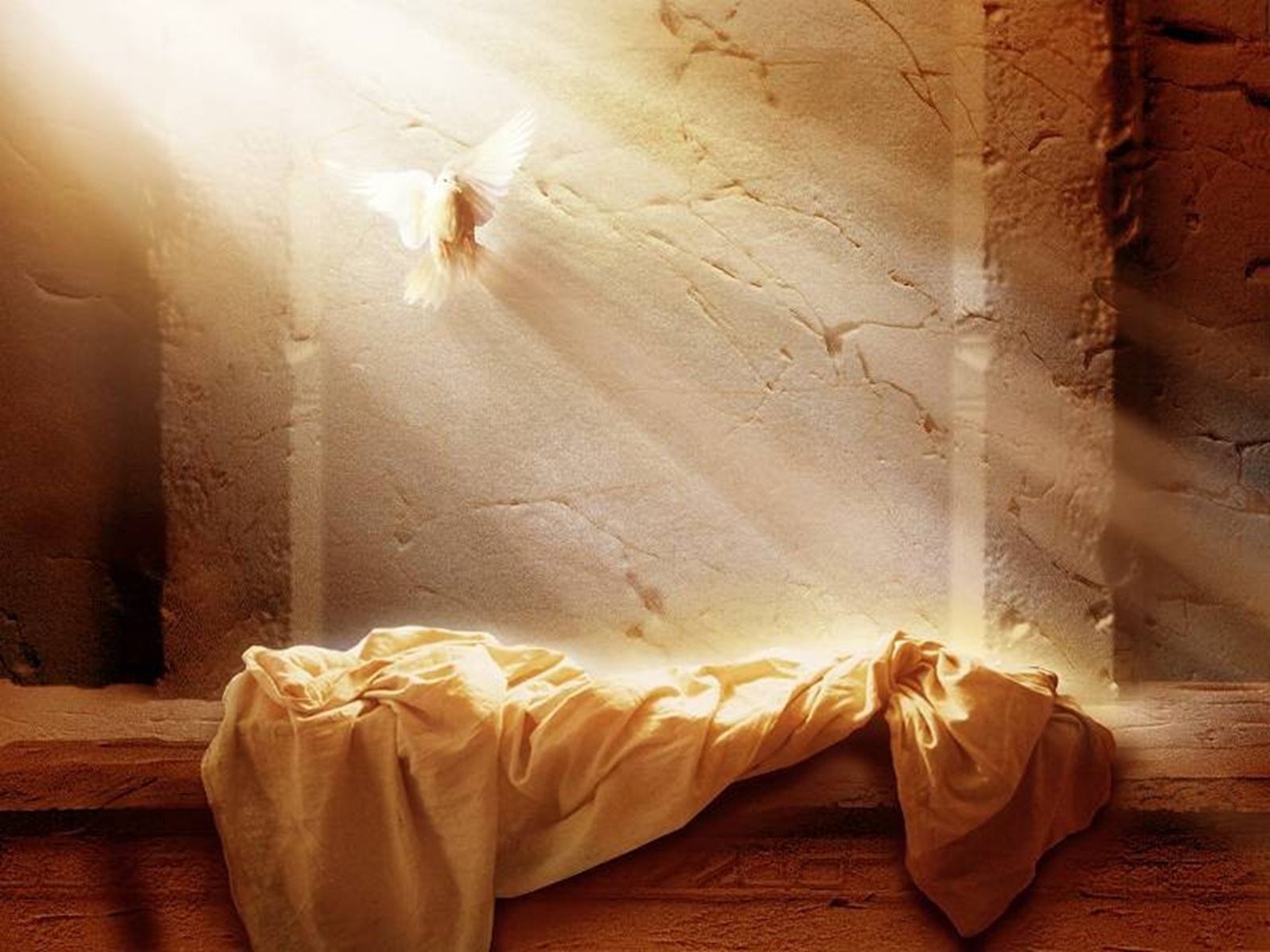
Easter Sunday, March 27, 2016: Resurrection Wonder


   It is not easy to convey a sense of wonder, let alone resurrection wonder, to another.  It’s the very nature of wonder to catch us off guard, to circumvent expectations and assumptions.  Wonder can’t be packaged, and it can’t be worked up.  It requires some sense of being there and some sense of engagement. 
(--Eugene H. Peterson)

May the experience of Resurrection wonder be yours...
HE IS RISEN, ALLELUIA!!
BLESSINGS AT EASTER FROM 
OUR LADY OF MOUNT CARMEL, MILL VALLEY!

Image source
Quotation source

Thursday, May 21, 2015

Sunday Gospel Reflection, May 24, 2015: I will put my spirit in you, that you may live...

Are you open to the arrival of the Holy Spirit in your life? 

Christians have not always been open to that holy presence.  Our Vigil readings this weekend remind us of the barriers we tend to erect when we focus more on what we can accomplish on our own than on what God is doing in our lives.  Our reading from Genesis offers the lesson of the so-called Tower of Babel, a monument to the arrogance of those caught up in their own state of prosperity, the same arrogance that led to humankind’s original fall from grace:  God scattered them from there all over the earth.  Hence creation’s labor pains, humankind’s expression of longing for God, as described by Paul in his letter to the Romans:  salvation, he reminds us, is not yet complete, but will be when we come into the full union of perfect love, a love we will find in all its depth and wonder if we remain in the Spirit, who comes to the aid of our weakness.  In John’s Gospel, Jesus promises the Spirit to those who thirst for God:  Rivers of living water will flow from within him who believes in me.  His promise is reminiscent of that of Psalm 104:  when God’s creatures… look to God, God gives them food in due time.  As always, the Vigil is about waiting, longing, hoping for the coming of the Spirit, and the eventual salvation that is promised…

If the Vigil is about our longing for God, the celebration of Pentecost Sunday helps us to recognize what the Spirit’s action in our lives can look like if we are open to it.  Jesus breathes the Holy Spirit on the disciples in John’s Gospel, and still they hesitate, but Luke’s account in Acts sends them, filled with the Holy Spirit, pouring into the street to proclaim God’s Word, Jesus himself.  A measure of the fullness of the Spirit is available to us, too, if we are are open to it, if we truly are able to pray, with true longing, Lord, send out your Spirit, and renew the face of the earth.  Only then, as Paul tells the Galatians, can we enjoy the fruits of the Spirit:  love, joy, and peace, to name just a few…  May the Holy Spirit come to unite what has been divided, and may we be open to its breath flowing forth to fill us with God’s love.

This post is based on Fr. Pat's Scripture class.
Image source:  Wordle

Thursday, April 9, 2015

Sunday Gospel Reflection, April 12, 2015: Jesus is the Christ...


How do we give witness to what we believe?

Sunday’s gospel reading from John reminds us of the story of the disciple Thomas, who is not present when Jesus first visits the apostles, and whose doubt is manifest:  Unless I see the mark of the nails in his hands and put my fingers into the nailmarks and put my hand into his side, I will not believe.  As it happens, Thomas has only to see the Lord one week later and his conversion is immediate:  My Lord and my God!  he exclaims.  God revealed before him elicits a profound statement of faith, and Jesus’ reflection on this moment is telling:  Blessed are those who have not seen and have believed.

After the first generation of disciples has passed, of course, this will be the situation of all those (including us) in the Church:  they will not see, yet they will believe.  In our reading from the Acts of the Apostles, it is the great power of the witness of the apostles that helps them to strive for peaceful community, where everyone is of one heart and mind.  All is shared in a just distribution of goods; they had everything in common. In the words of Psalm 118, this is cause for rejoicing, the joyful shout of victory in the tents of the just, the tents of those who do God’s work.

Like the apostles, we are charged with a mission:  As the Father has sent me, so I send you, Jesus says. We are called, in other words, to give witness; it is part of our identity as baptized believers in Christ.  We are called to bring the love God has to bear for us upon the world, to transform it, giving witness to his love with our lives.  With the help of the Spirit – the one that testifies, according to the First Letter of John – we are called to plant ourselves squarely within the domain of God’s love, a position from which we can give open witness to our belief that Jesus is indeed the Christ, and to the ways our lives are transformed, daily, by faith in his love.

This post is based on Fr. Pat's Scripture class.
Image source:  Wordle